

Save time, reduce errors, and communicate payments clearly — professionally designed templates ready to use today.
Whether you’re a bookkeeper reconciling hundreds of invoices each month or a business owner sending a one-off payment to a supplier, a clear remittance advice document is one of the simplest things you can do to keep your accounts payable and receivable running smoothly.
We’ve put together 10 professionally formatted remittance advice PDF templates — each designed for a different business scenario. They’re free to download, ready to use straight away, and available on Google Drive if you’d prefer to make your own editable copy.
What Is Remittance Advice?
Remittance advice is a document sent by a buyer to a seller at the time of payment, confirming exactly what the payment covers. Think of it as a payment notification — it tells your supplier which invoices you’re paying, how much, and why, so they can reconcile their accounts without having to chase you.
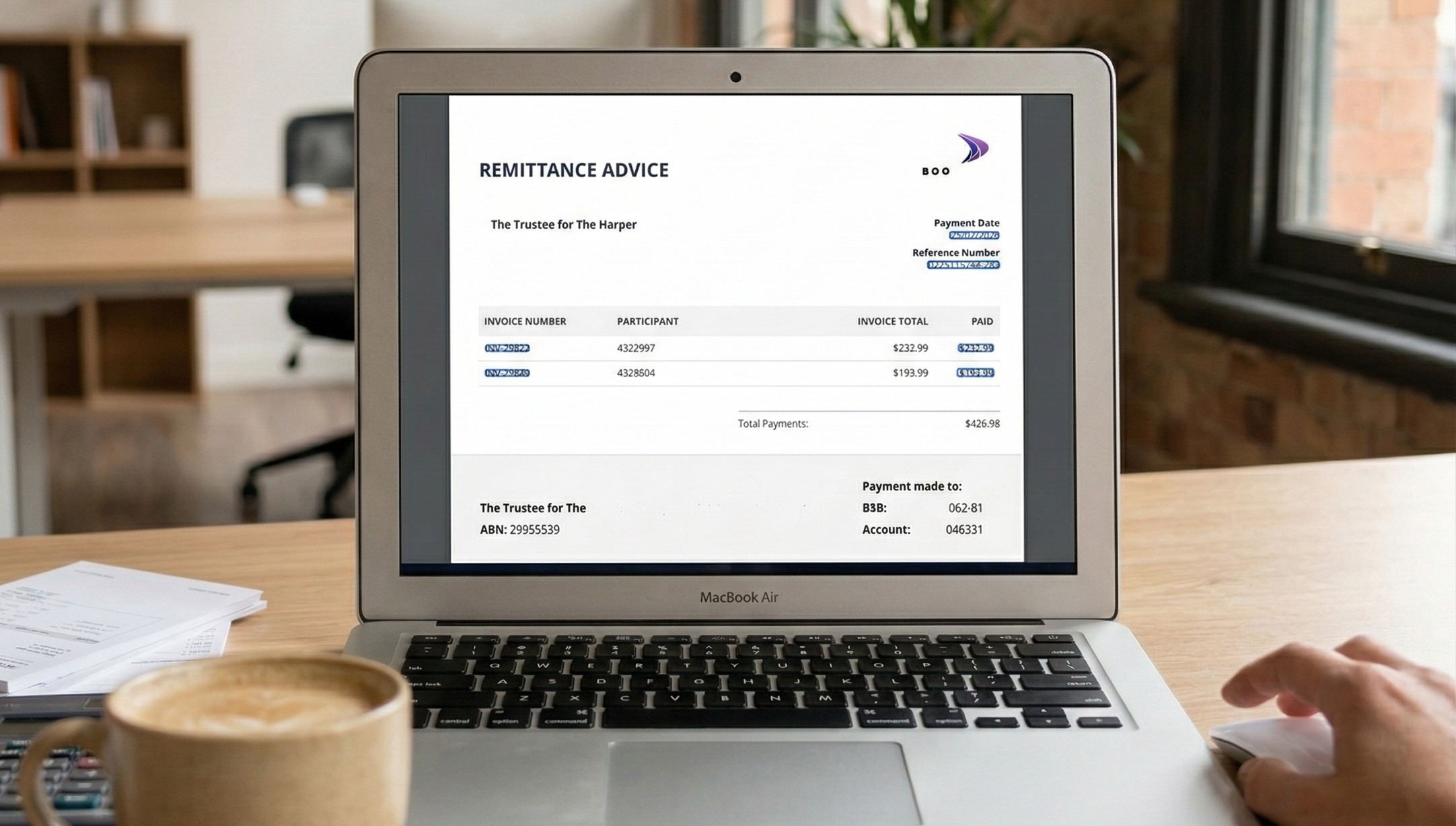
A complete remittance advice document typically includes:
- Payer name and contact details
- Payee name and contact details
- Invoice number(s) being paid
- Invoice date and due date
- Total amount paid
- Payment method (EFT, BPAY, cheque, etc.)
- Any discounts, credit notes, or deductions applied
- A payment reference number for reconciliation
Without remittance advice, suppliers and accounts receivable teams spend significant time chasing down which invoices a payment covers — especially where bulk or partial payments are made. A well-formatted remittance slip eliminates that back-and-forth entirely.
Did you know?Accounts receivable teams using AI tools like RemittanceGo save an average of 8 hours per client per week by automating the matching of incoming remittance advice PDFs to open invoices — no more manual searching through emails and spreadsheets.
10 Free Remittance Advice PDF Templates
Each template below is available as a clean, print-ready PDF. Click Download PDF for the direct file, or View on Google Drive to open and save an editable copy to your own account.
NDIS Remittance Advice Template
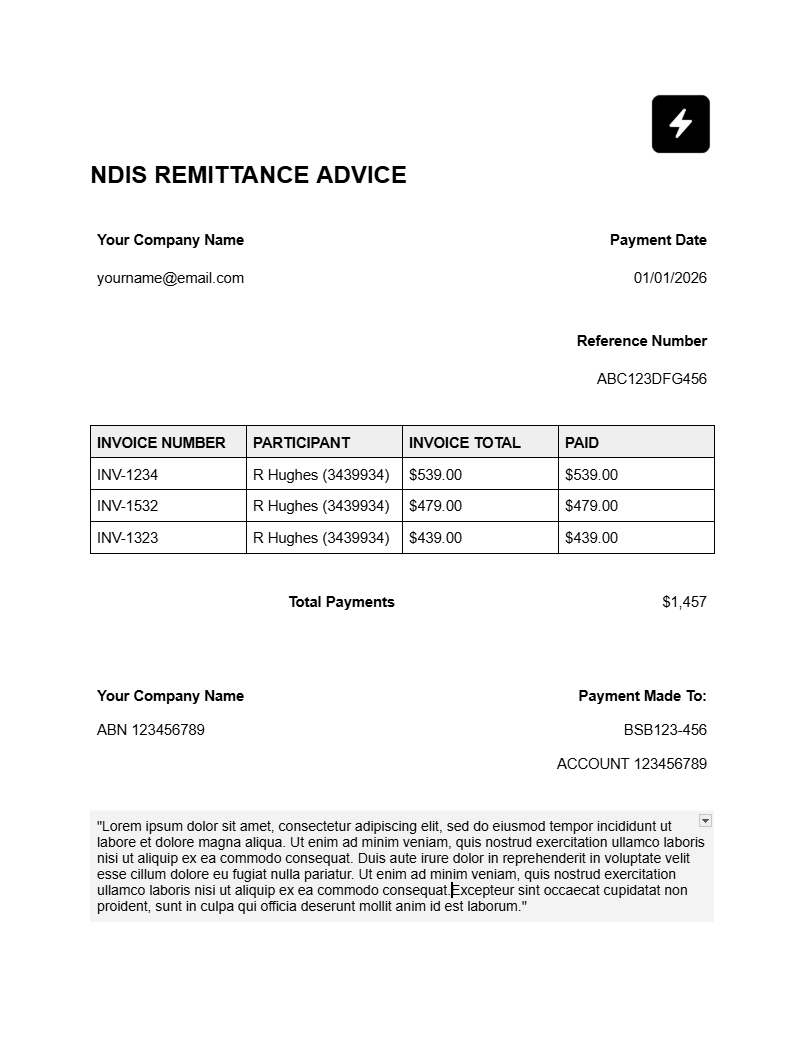
Simple and clean. Suitable for NDIS businesses, a field is given for the participant name.
Simple Payment Remittance
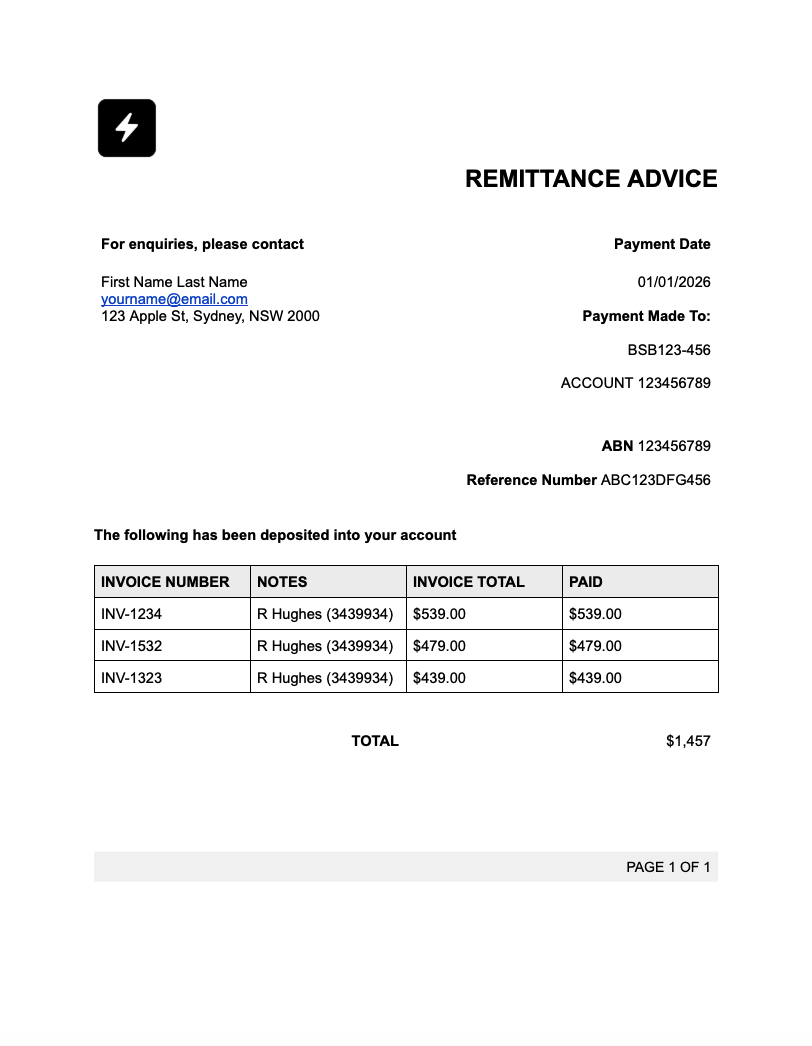
A very simple, lightweight and allround remittance advice. Extremly clear and suitable accross all businesses, based off common government styles.
Corperate Remittance Advice
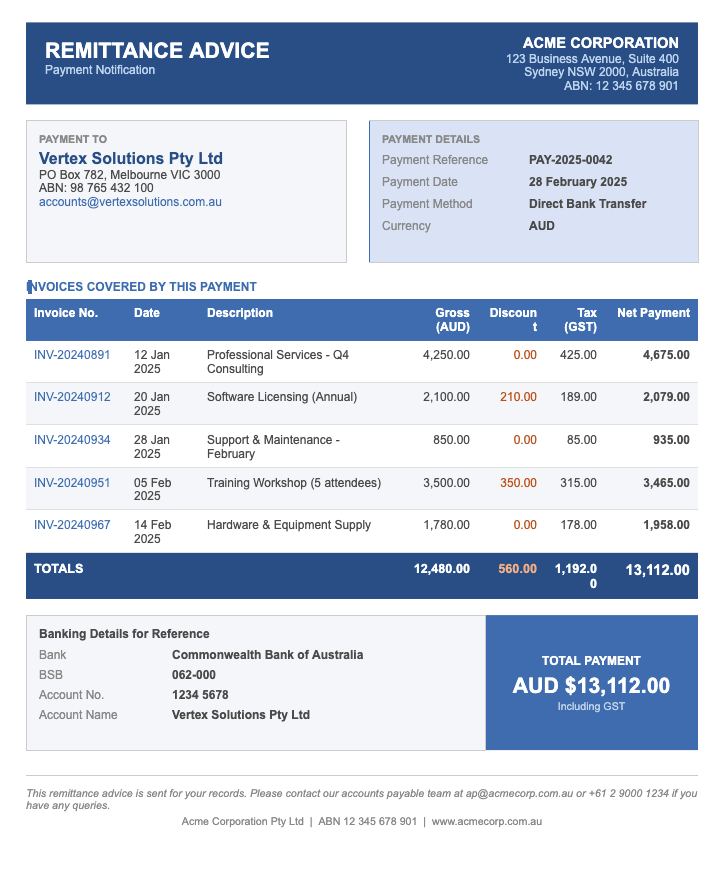
A corperate looking and all-inclusive remittance advice. Suitable for those looking for a highly designed remittance advice and prefer a non simplistic approach.
Gentle Remittance Advice
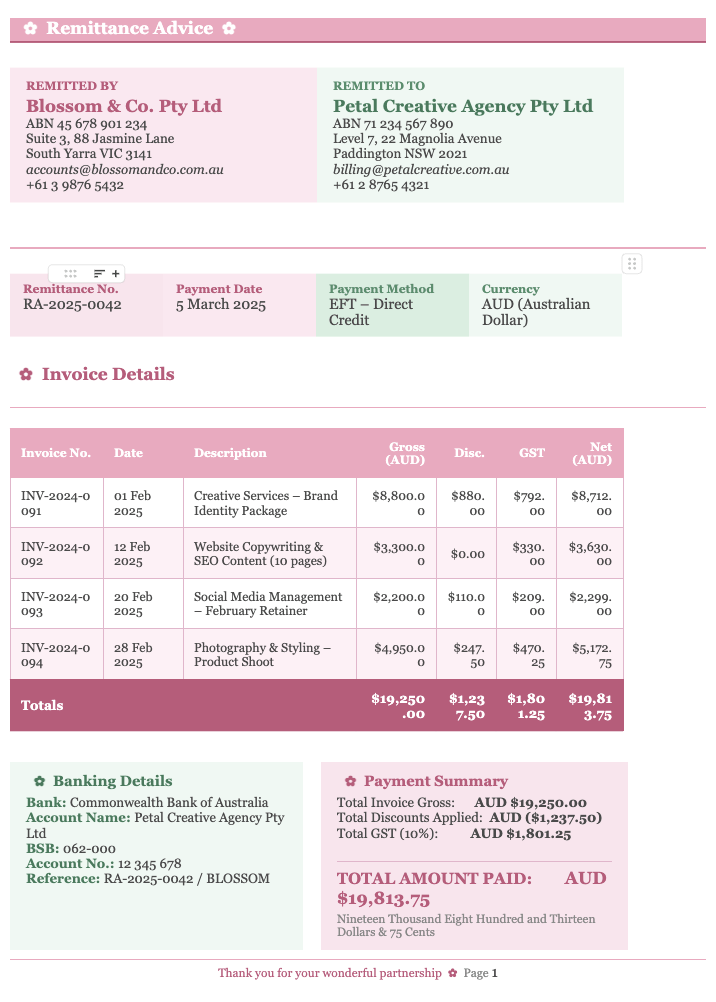
Using soft colours and a gentle approach, this template is suitable for those who wish to exhibit compassion in their branding.
Minimalist Remittance Advice
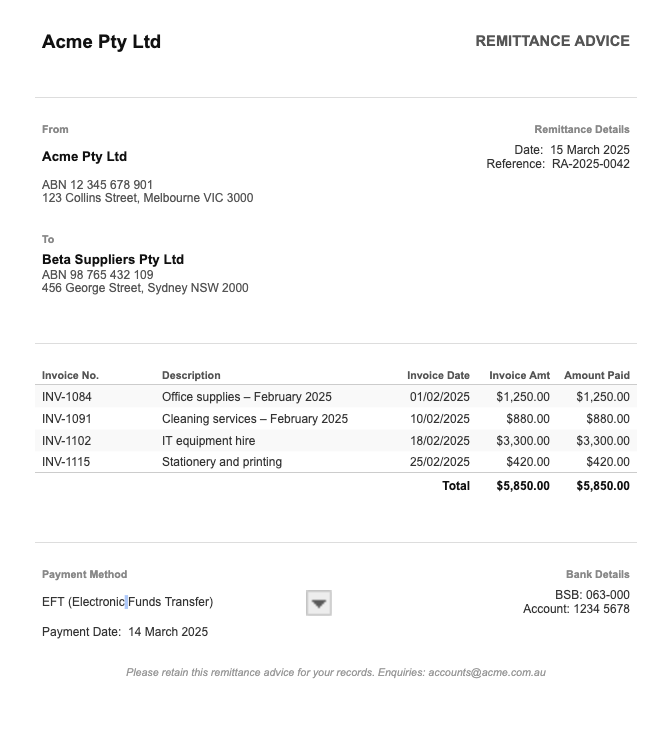
Prefer a black and white minimalist approach? This template handles it cleanly — showing the gross invoice amount, the credit note reference and value, and the net payment made, so there’s a complete paper trail for both parties.
Healthcare Remittance
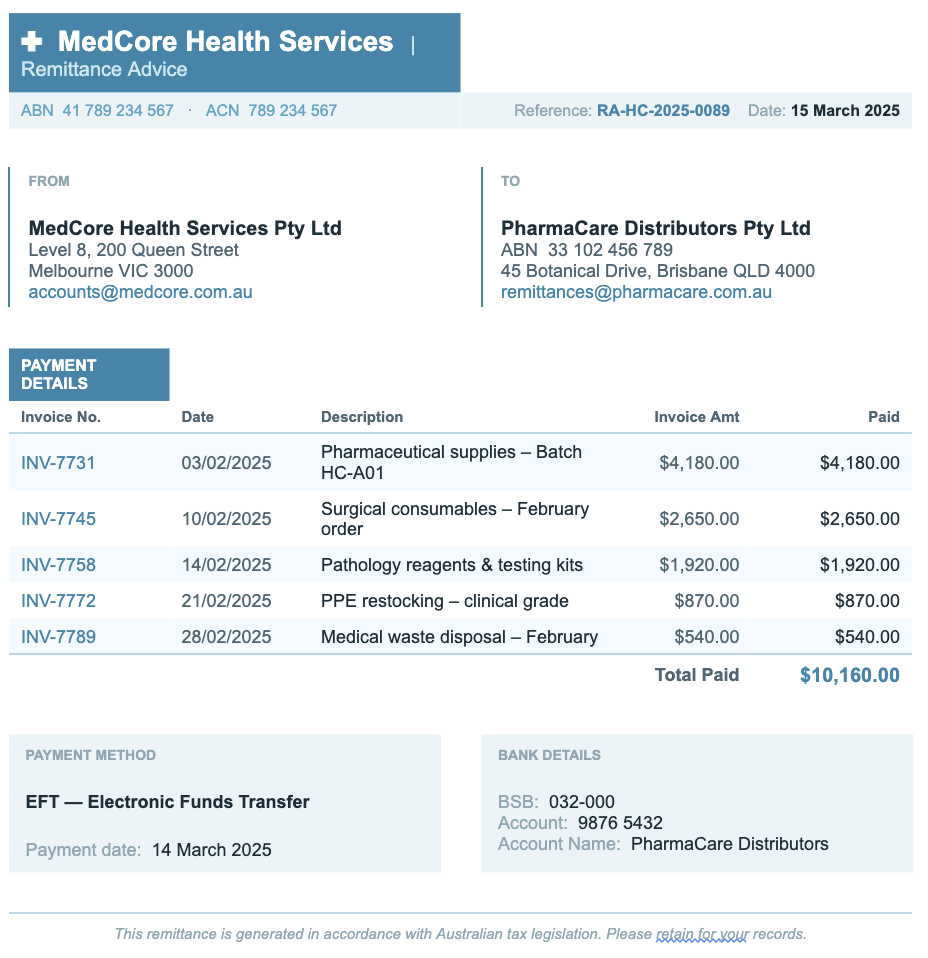
Suitable for those adopting a strictly healthcare presentation.
Freelancer / Sole Trader Remittance
A streamlined, minimal template for freelancers and sole traders who want to look professional without the complexity of a full corporate format. Simple, clean, and quick to fill in — perfect for agencies paying contractors.
Construction & Trade Remittance Advice
Designed for building and trades businesses where progress claims, retention amounts, and variation orders are common. Includes fields for contract number, retention withheld, and claimed vs. certified amounts.
Supplier Statement Reconciliation Remittance
When you’re paying against a supplier statement rather than individual invoices, this template lets you reference the statement date and total, then detail any excluded items, disputes, or credit offsets before arriving at the payment figure.
End-of-Month Consolidated Remittance
For businesses that consolidate all supplier payments at month-end, this template includes a cover sheet summarising the full payment run — total amount, number of invoices, payment date, and bank reference — followed by a full itemised breakdown.
Why Does Remittance Advice Matter?
Remittance advice is not legally required in most countries, but it has become a standard best practice in business finance for good reason:
| Benefit | Why It Matters |
|---|---|
| Faster reconciliation | Suppliers can match payments to invoices instantly, reducing debtor days and month-end delays. |
| Fewer disputes | Clear documentation removes confusion around partial payments, deductions, and credits. |
| Better cash flow visibility | Both parties have a shared record of what has been paid and what remains outstanding. |
| Audit-ready records | Remittance slips form part of your financial paper trail for tax and compliance purposes. |
| Stronger supplier relationships | Consistent, professional remittance documents signal that your business is well-run and easy to deal with. |
When Should You Send Remittance Advice?
Best practice is to send it at the same time as — or immediately after — making a payment. You should always send remittance advice when:
- You are paying multiple invoices in a single bulk payment
- You are making a partial payment against a larger invoice
- You have applied an early payment discount or credit note
- The bank transfer reference doesn’t clearly identify the invoice
- You are paying a supplier for the first time
Best Practices for Sending Remittance Advice
Having a good template is only half the battle. Here’s how to make your remittance process as effective as possible:
1. Send it the same day as the payment
Timing matters. If you send remittance advice a week after the payment hit your contact’s account, they’re likely to start following up with you. Send it immediately — ideally as part of an automated process triggered by your financial software
2. Always include the invoice numbers — not just the amount
Include the full invoice number as it appears on the invoice they sent you, such as INV-55223. Try to avoid appending unique information around it. This helps their team match it against their software (most likely Xero or quickbooks). It will help avoid human error
3. Include a payment reference
A predictable format like “Remittance Advice — [Your Company] — Ref [XXX] — [Date]” makes it easy for suppliers to filter, find, and act on your remittance slips without digging through their inbox.
4. Make it easy to understand split payments
If you are paying 5 installments of a large invoice, make this clear via the formatting of your document. Avoid strange line breaks, alignment, or poor formatting that make it hard to interpret.
5. Keep a copy for your own records
File your sent remittance advice alongside your payment records. This creates a clear audit trail and lets you pull documentation quickly if a supplier disputes a payment months down the track.
Common mistake to avoid:Never send remittance advice without a payment reference that matches what appeared on your actual bank transfer. Mismatched references are the single biggest cause of failed reconciliation on the supplier’s end.
Tired of manually matching remittance PDFs to invoices?
RemittanceGo uses AI to automatically match incoming remittance advice to your open invoices in Xero — eliminating hours of manual work every week for your AR team.
Frequently Asked Questions
Is remittance advice a legal requirement?
In most countries — including Australia, the UK, and the US — remittance advice is not legally required. However, it is considered industry best practice and is widely expected in B2B trade relationships.
Can I send remittance advice by email?
Yes — and email is now the standard. Simply attach the completed PDF to an email addressed to your supplier’s accounts receivable team. Include the key details in the body of the email too, so the information is visible before the attachment is opened.
What’s the difference between remittance advice and a receipt?
A receipt is issued by the seller to confirm they’ve received payment. Remittance advice is issued by the buyer at the time of making payment, to explain what the payment covers. They serve complementary purposes in the payment cycle.
Do these templates work for GST / VAT?
Yes. Each template includes a tax field that can be labelled GST, VAT, or whichever designation applies in your region. If you’re referencing tax invoices, check with your accountant whether you need to include a GST/VAT breakdown on the remittance document itself.
How do I edit a PDF template?
The easiest option is to open the Google Drive version and save a copy to your own account — you can then edit it directly in Google Docs. Alternatively, Adobe Acrobat Reader (free) supports form-filling in PDFs.
What if I receive a large volume of remittance PDFs from customers?
If you’re spending hours each week matching incoming remittance PDFs to open invoices in Xero, that’s exactly the problem RemittanceGo was built to solve. Our AI reads the PDFs and matches them to your invoices automatically — no copy-pasting, no manual lookup.

Wrapping Up
A well-formatted remittance advice document is one of the smallest investments you can make with one of the biggest payoffs: faster reconciliation, fewer disputes, stronger supplier relationships, and a cleaner audit trail.
Pick the template that best fits your payment scenario above, fill in your details, and send it alongside your next payment. Your suppliers’ accounts receivable teams will thank you — and you might just get paid faster next time around too.
If you’re on the receiving end of large volumes of remittance PDFs and spending too much time matching them to invoices, see how RemittanceGo can automate that process for you.